

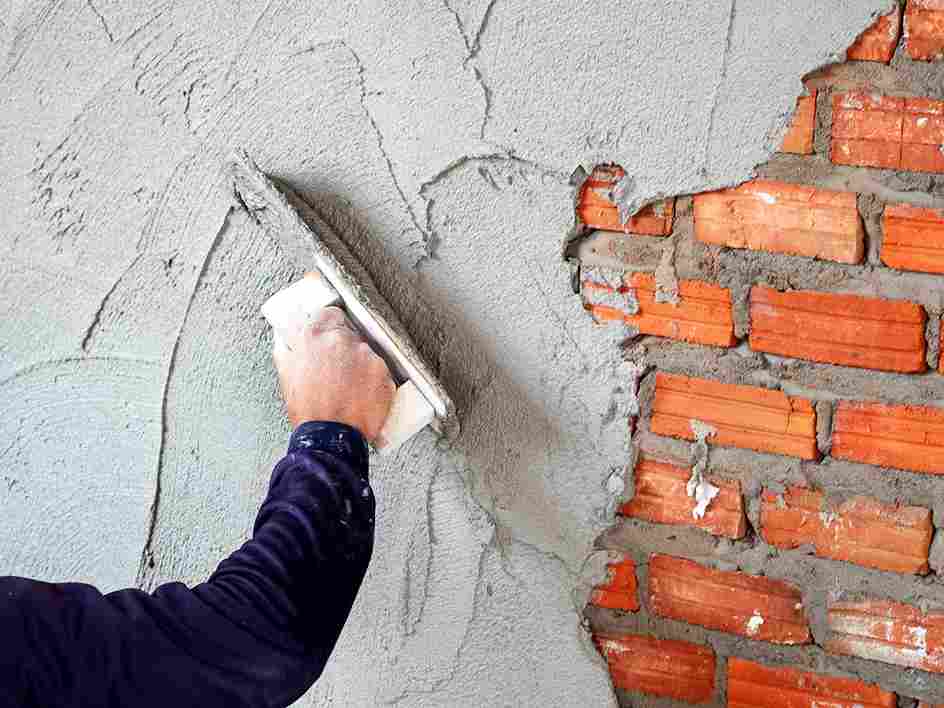
Interior & Exterior Plastering
Plaster is a thin layer of mortar applied over the masonry surface and it acts as a
damp-proof coat over the brick masonry work. Plastering also provides a finished surface
over the masonry that is firm and smooth hence it enhances the appearance of the
building.
The primary objectives of plastering are to protect the surface from atmospheric
influences, to cover the defective workmanship in masonry, to conceal porous materials,
and to provide a suitable surface for painting.
Standard Specifications used for the Plastering Work
American Standards
ASTM C926 Standard Specification for Application of Portland Cement-Based Plaster
New Zealand Standards
NZS 4251-1 (2007): Solid plastering – Cement plasters for walls, ceilings and soffits
European Standards
BS EN 998-1 Specification for mortar for masonry – Part 1: Rendering and plastering mortar.
Indian Standard (BIS codes)
- IS 383: Specification for coarse and fine aggregates from natural sources for concrete
- IS 1542: Specification for sand for plaster
- IS 2645: Specification for integral cement waterproofing compound
- IS 8112: Specification for 43 grade OPC
- IS 269: Specification for 33 grade OPC
- IS 1489: Specification for Portland Pozzolana Cement
Procedure of Plastering Work
Preparation of Surface for Plastering
- Keep all the mortar joints of the wall rough, so as to give a good bonding to hold plaster.
- Roughen the entire wall to be plastered.
- Clean all the joints and surfaces of the wall with a wire brush; there should be no oil or grease left on the wall surface.
- If there exist any cavities or holes on the surface, then fill them in advance with appropriate material.
- If the surface is smooth or the wall to be plastered is an old one, then rake out the mortar joint to a depth of at least 12 mm to give better bonding to the plaster.
- Wash the mortar joints and the entire wall to be plastered, and keep it wet for at least 6 hours before applying cement plaster.
- If the projection on the wall surface is more than 12 mm, then knock it off to obtain a uniform surface of the wall. This will reduce the consumption of plaster.
Groundwork for Plaster
- In order to get uniform thickness of plastering throughout the wall surface, first fix dots on the wall.
- A dot means a patch of plaster of size 15 mm × 15 mm and having a thickness of about 10 mm.
- Dots are fixed on the wall first horizontally and then vertically at a distance of about 2 meters, covering the entire wall surface.
- Check the verticality of dots, one over the other, by means of a plumb-bob.
- After fixing dots, the vertical strips of plaster, known as screeds, are formed in between the dots.
- These screeds serve as the gauges for maintaining even thickness of plastering being applied.
Applying Under Coat or Base Coat
- In case of brick masonry, the thickness of the first coat plaster is generally 12 mm; for concrete masonry, it varies from 9 to 15 mm.
- The ratio of cement to sand for the first coat plaster varies from 1:3 to 1:6.
- Apply the first coat of plaster between the spaces formed by the screeds on the wall surface using a trowel.
- Level the surface using flat wooden floats and wooden straight edges.
- After leveling, allow the first coat to set (but not dry), then roughen it with a scratching tool to form a key for the second coat of plaster.
Applying Finishing Coat
- The thickness of the second coat or finishing coat may vary between 2 to 3 mm.
- The ratio of cement to sand for the second coat plaster varies from 1:4 to 1:6.
- Before applying the second coat, dampen the first coat evenly.
- Apply the finishing coat with wooden floats to a true even surface and use a steel trowel to give it a finishing touch.
- As far as possible, the finishing coat should be applied starting from top towards bottom and completed in one operation to eliminate joining marks.
Curing of Plastering works
- After completion of the plastering work, it is kept wet by sprinkling water for at least 7 days to develop strength and hardness.
- Use gunny bags or other materials to keep the plastering work wet in external works.
- Improper curing may lead to cracks formation or efflorescence in plaster work.